
Holiday Prep 2025: One-Weekend Whole-Home Cleanout
Nick Bennett • December 1, 2025
Santa Delivers with the help of Precision Disposal: Declutter experts via Dumpster Rental Services
Holiday chaos isn’t the tree or the travel—it’s the stuff. Garages packed to the rafters. Closets that fight back. Guest rooms that turned into storage. This is a blunt, field-tested plan to clear it all in one weekend without surprise fees, reloads, or wasted trips.
Why do this now (and not “after the holidays”)
- Space before guests. You’ll actually park in the garage and close the closet door without playing Tetris.
- Contractor advantage. If a January refresh is coming (flooring, paint, kitchen/bath), the cleanout done now means trades roll straight in.
- Budget control. One correctly sized container, one clean pull, zero “oops” charges. That’s cheaper than multiple piecemeal dump runs.
Step 1: Scope the job like a pro (10-minute walkthrough)
Walk the house with a notepad (or voice notes). For each zone, mark Keep / Donate / Toss and circle anything dense (wood, tile, stone, exercise equipment, old TVs) vs light (furniture, drywall scraps, cardboard).
Zones to hit:
- Garage & shed (broken tools, paint cans you’ll never use, dead appliances, scrap wood)
- Attic/closets (holiday decor, clothes, boxes you haven’t opened in years)
- Living/dining (extra chairs, damaged furniture)
- Yard corners & side yards (planter pots, bricks, pavers, fencing offcuts)
If you write “maybe” on something, it’s usually a Toss. Be ruthless now or you’ll pay to store junk another year.
Step 2: Pick the right container (choose by debris, not house size)
- Light/bulky cleanouts (furniture, cardboard, decor, shelving): 20 or 25-yard.
- Whole-home purge / big garage + attic (still mostly light): 25 or 30-yard — gives headroom so you can keep it flat and at/below the rails and avoid a second pull.
- Dense pockets (if you’re also pitching tile, pavers, stone, heavy lumber): keep those low and centered. If dense materials are more than a slice of the job, call it out when booking so we spec load strategy—don’t guess.
- Roofing this weekend too? Asphalt single-layer often runs clean in a 25/30 if you keep it level; tile/stone roofing is a different animal—talk to us first.
Step 3: Prep the site so set/pick takes 5 minutes
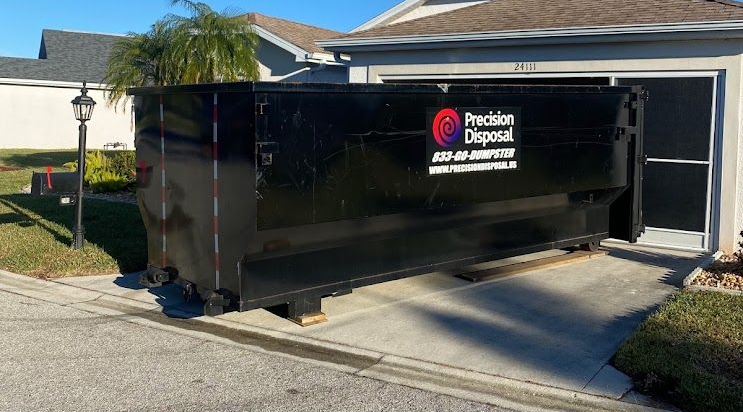
- Drop zone: flat, hard surface; plywood under rails/wheels on pavers or new asphalt.
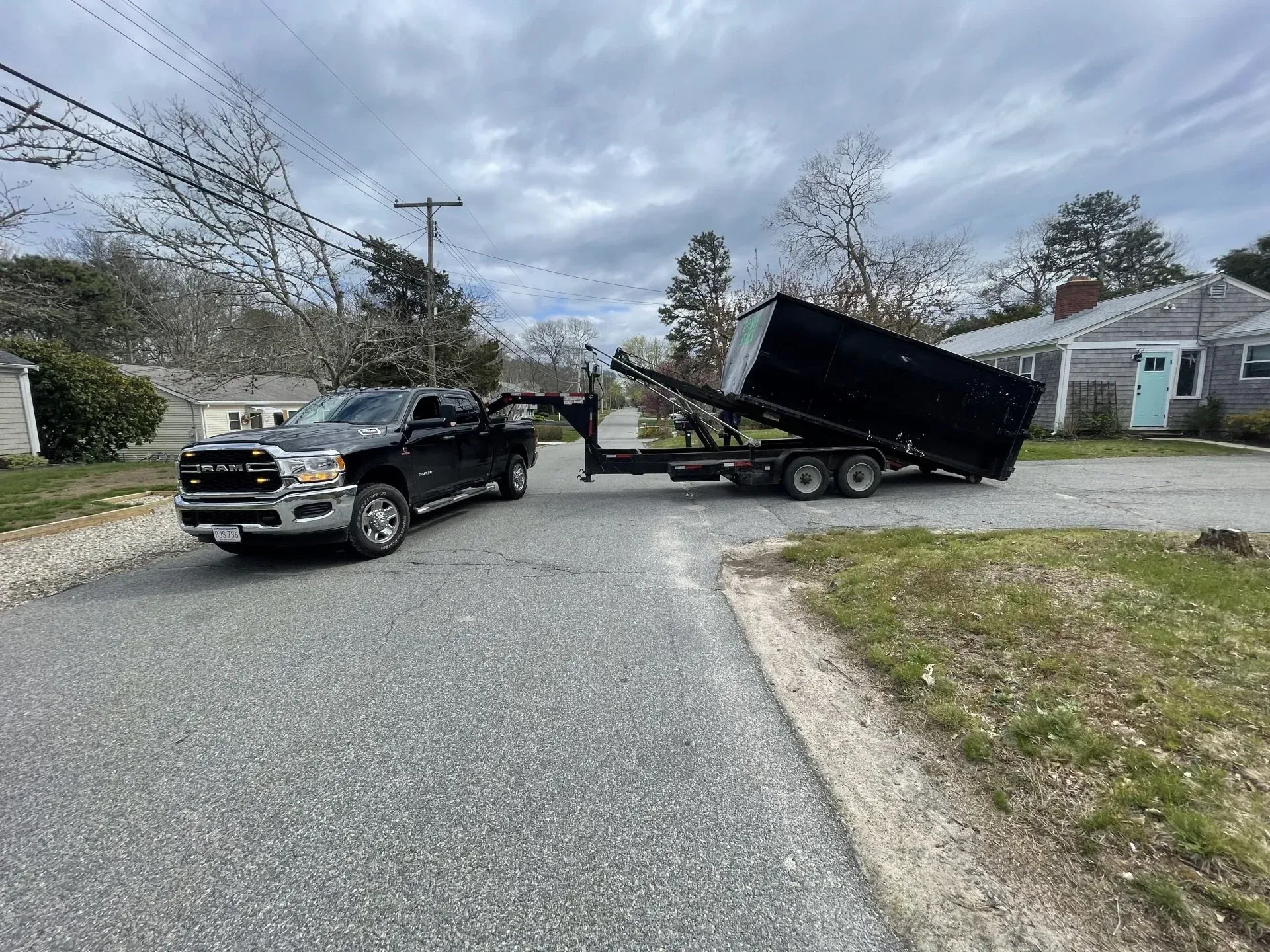
- Approach: 60–80 ft straight with 10–12 ft overhead clearance (branches, wires, balconies).
- Mark it: chalk/cones where the rails should land and which way the door should face.
- Access: cars out of the swing path; gate codes working; someone on-site for set and pick.
Step 4: One-Weekend Schedule (do it once, do it right)
Friday — Stage & Sort
- Set three clearly labeled areas: Donate, Restricted, Load.
- Move Donate items to the driveway-side of the garage so they don’t end up in the can by mistake.
- Put Restricted (see list below) on a pallet or tarp—easy to keep out, easy to take to HHW/e-waste.
- Clear lanes from house to can; stack empty boxes for breaking down.
Saturday — The Load
- Heavy base first (solid wood pieces, small lumber, any dense items) laid low and centered front-to-back.
- Corners with light items (bagged junk, broken-down cardboard, plastics).
- Break down furniture; remove legs/doors. Tape sharp edges; wrap glass.
- Latch the door and only then top off lightly from the sides.
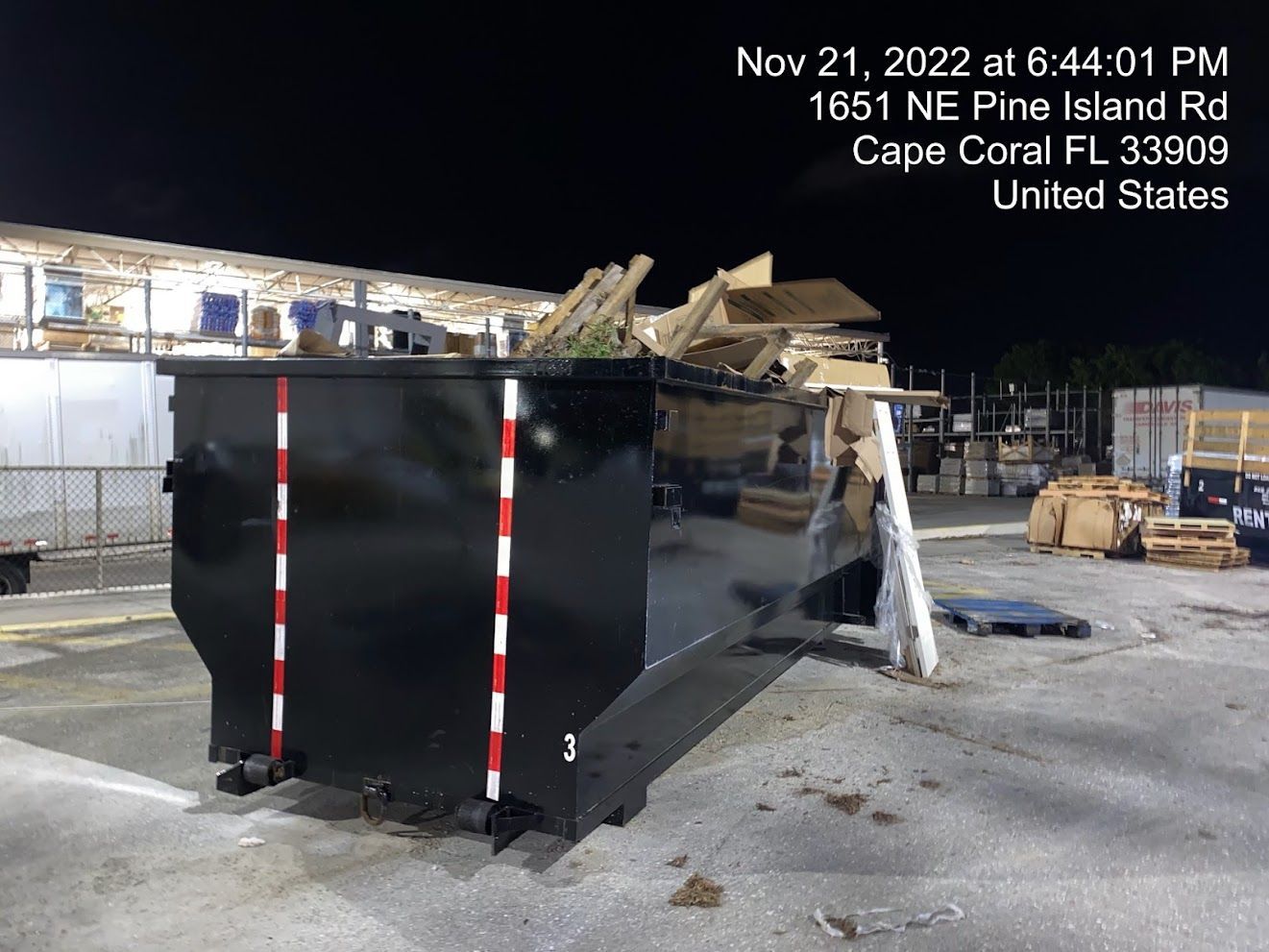
- Stop at the rail. If the tarp can’t lie flat, it won’t haul.
Sunday — Reset & Pickup
- Quick sweep for nails/splinters.
- Donation run or pickup.
- Confirm the pickup window; keep the approach clear.
Step 5: What not to load (and what to do instead)
- Liquids & chemicals: paint, thinners, fuels, pool chems, pesticides → HHW programs.
- Batteries: car, lithium, tool packs → e-waste/universal waste drop-off.
- Pressurized tanks: propane/helium → retailer or HHW.
- Mercury items: fluorescent tubes, some thermostats → HHW.
- Refrigerant appliances: certified recovery before loading.
- Tires: tire retailers/programs (avoids surcharges).
If you’re unsure, text us a photo. We’ll give you the fast “yes/no” and the right outlet.
Step 6: Loading mechanics that save real money
- Heavy low/centered so the truck lifts cleanly and stays inside limits.
- Kill air pockets: break down cabinets/boxes; don’t toss whole furniture if it can be flattened.
- Below the rails, always. Overfilled = refused haul, reloads, and delay.
- Door discipline: latch it before topping—no last-minute avalanches.
Step 7: Common mistakes (and how to avoid them)
- Heaping to “save a trip.” That pile above the rails won’t move. Call the pull on time.
- Mixing dense and light just to “use space.” Weight hits first, not volume. Keep dense material in the base; top with light only.
- Burying restricted items. You’ll pay in rejections and rework. Stage them separately Day 1.
- Vague quotes. Insist on included tonnage (allowance vs. minimum) and pro-rated overages from certified scale tickets—no ¼- or ½-ton rounding games.
Regional Callouts
Massachusetts (MA) — Old-Home Reality & Tight Town Rules
- Legacy materials are dense. Plaster/lathe, thick subfloors, and chimney brick behave like masonry. Don’t pick a size by “room count”—pick by material. If you discover plaster late in the day, stop, keep it low, and call the pull rather than pushing your luck.
- Village placement is precise. Narrow lanes and street parking mean angles matter. Mark where the rails should sit and which way the door faces so set/pick doesn’t become a three-point puzzle.
- Diversion gotchas. Mattresses and certain electronics often require separate handling. Keep a “no-can” pallet so they never touch the load; it’s cheaper than contamination penalties.
- Cold snaps. Icy approaches cause failed pickups. Clear the run-up, salt if needed, and knock ice off lids/rails before your window.
Rhode Island (RI) — Small Lots, Tight Windows, Clean Pulls
- Time windows are real. In historic or coastal streets, your pickup may need to hit a specific hour to avoid traffic conflicts. Book with precision and keep the lane open.
- Right-sized containers save money. A 15-yard often beats a 20 for small, dense interiors (tile/plaster baths, brick hearths) on total fees—less temptation to heap, fewer surprises at the scale.
- Permit/obstruction nuances. Some towns expect a paper-trail for curb-lane use. Screenshot or print your approval so drivers can show it on the spot.
- Placement discipline. Parallel placements are common; mark nose direction and landing distance from curbs so set is clean on the first try.
SWFL / Florida — Pavers, HOAs, and High-Throughput Jobs
- Paver protection is non-negotiable. Use 3/4" plywood under rails/wheels—cheaper than repairing decorative stone.
- HOA/condo logistics. Elevators, concierge desks, and service lanes require exact windows. Share codes and contacts; we’ll hit them so crews aren’t waiting.
- High-density pockets, handled. If the holiday cleanout morphs into tossing tile, pavers, or gym equipment, keep those low/centered and tell us early if you think a pull might be needed. We’ll time it so you don’t heap.
- Driveway approach clarity. Mark the landing and the door swing. Keep vehicles and landscaping crews out of the approach during your windows.
When to call us (hint: before you load the first box)
You tell us the debris mix, zones, and the address. Precision Disposal will:
- Recommend the correct size (not oversold, not undersized)
- Mark the drop and approach so set/pick are one-shot clean
- Put the pickup on the calendar so you don’t push past the rails
One weekend, one container, one clean pull. That’s the whole point

Learn how dumpster rental scams work in 2025–2026, why confirmation texts can mislead you, and how to verify a company before paying.
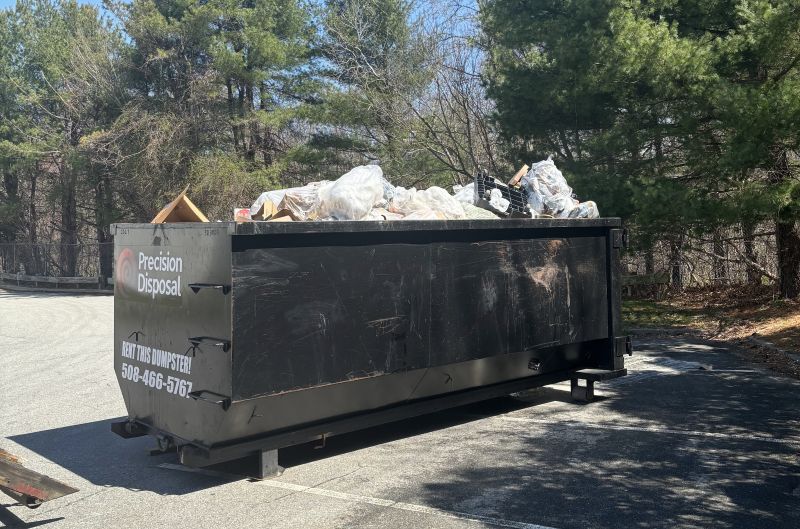
Cape Cod & Bourne dumpster rental tips for June 2026 cleanups, landscaping, renovations, and seasonal debris removal projects. Read our blog to learn more.

Cape Cod & Bourne MA June 2026 dumpster rental guide for landscaping, deck builds, renovations, and efficient summer cleanup projects. Read our blog.
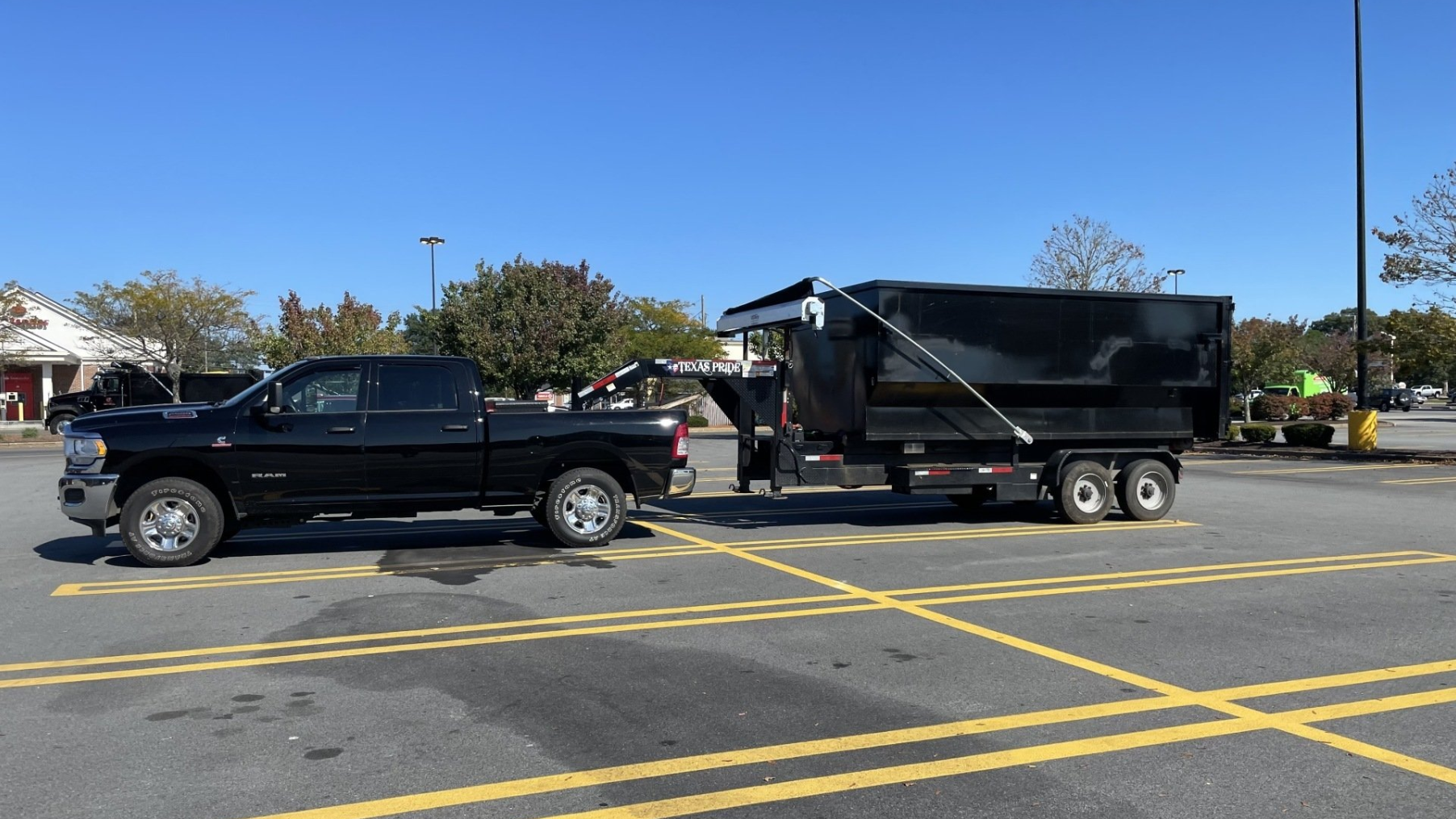
Cape Cod & Sandwich MA May 2026 cleanup guide for spring projects, renovations, and yard waste with local dumpster rental tips and sizing help. Read more.
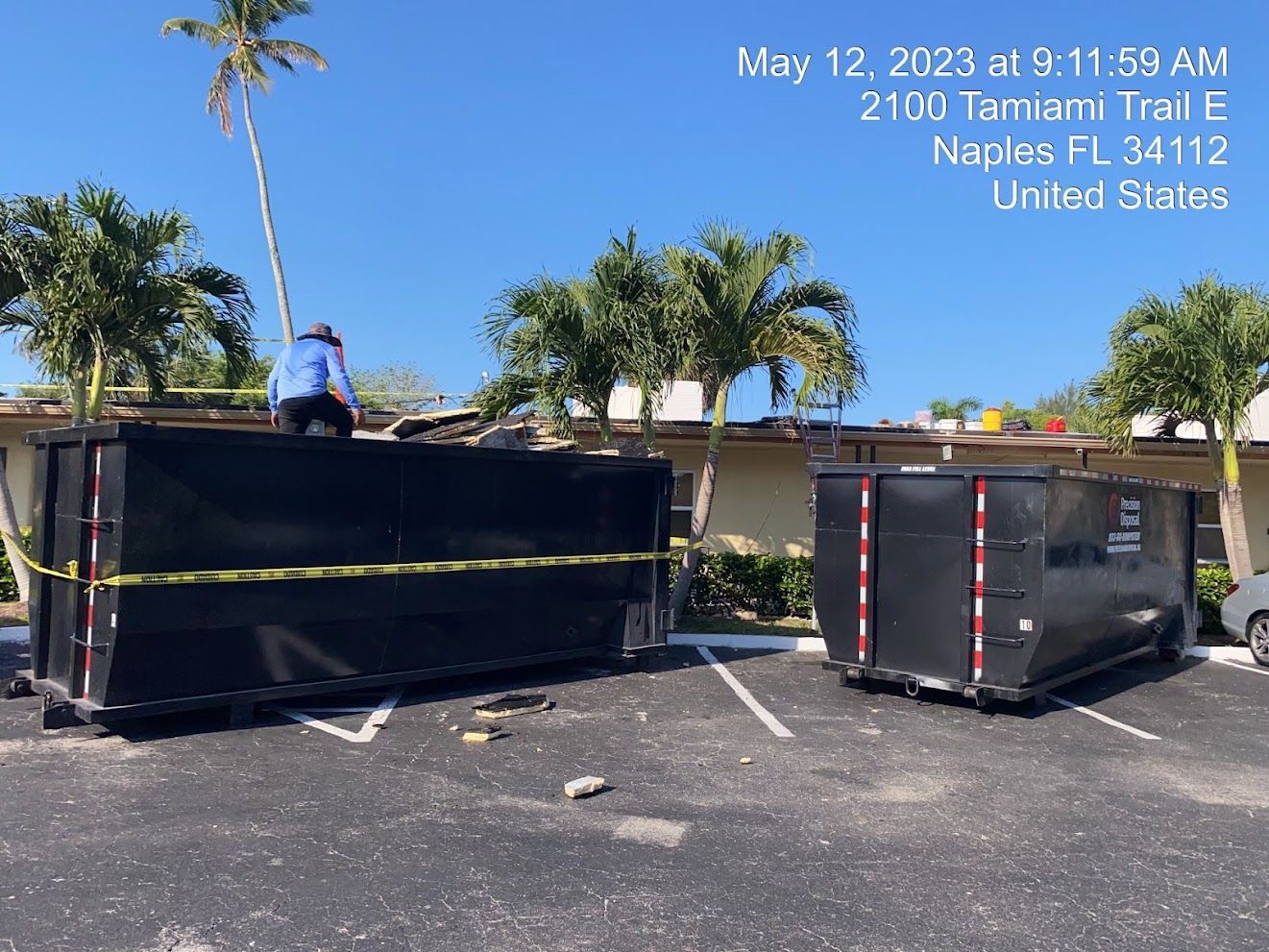
See the most requested dumpster sizes in Fort Myers. Learn what locals book for storm cleanup, renovations, yard debris, and home cleanouts.
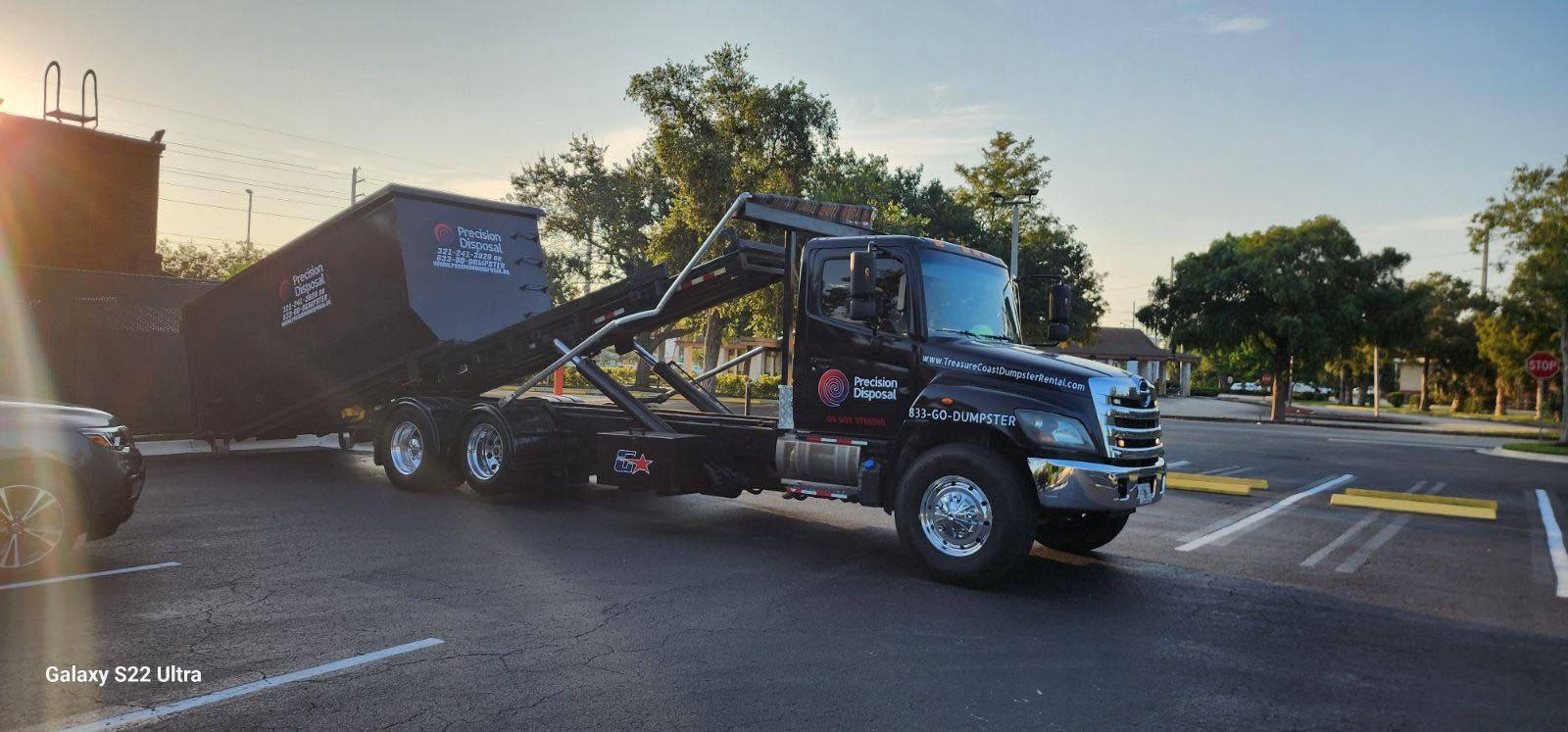
See the most requested dumpster sizes in Middleborough. Learn what locals book for cleanouts, renovations, yard debris, and home projects.

See the most requested dumpster sizes and projects in Cape Cod. Find out what your neighbors book and choose the right dumpster for your home or job.
Size by material, load once/haul once, square-based roofing plan, and MA/RI/SWFL specifics. Finish the season on schedule with Precision Disposal.
No-BS guide to allowed, restricted, and “ask first” items, plus MA, RI & SWFL rules. Call Precision Disposal for fast answers today! Read more
Quick rules for when dumpster permits are required across South Shore & Cape Cod. Driveway vs. street placement, timing, and placement tips.