The New Dumpster Rental Booking Scam (2025–2026): Why a Confirmation Text Doesn’t Mean You Paid the Right Company
In 2024 we published a warning about dumpster rental scams. That post still stands. The red flags have not changed. What has changed is how far the scammers will go to look real. In 2025 and 2026, a lot of homeowners are not just sending money to a fake listing and never seeing a dumpster. The dumpster does show up. A real local company does text you. Your phone does ring with a delivery window. And you still paid a scammer. That is the new version. Read this before you book anything you found on Facebook, Nextdoor, Google Ads, or a “too cheap” website.
First: do what the original post said
Before we get into the new twist, the basics still catch most of these people.
1. Verify it is a real company.
Search the exact business name on Google. Look for a Google Business Profile with photos, hours, a map pin, and a history of reviews — not three brand-new 5-stars from last Tuesday. Call the number on that Google listing, not the number in the ad.
2. No Google profile = probably fake.
A real roll-off company has trucks, a yard, insurance, and a trail of customers. If you cannot find them on Google Maps, treat that as a hard stop.
3. Cash App, Venmo, Zelle, or “Friends & Family” PayPal = probably fake.
Real dumpster companies invoice you and take a credit card through their own system. Peer-to-peer apps are how scammers get paid with no chargeback protection for you. Once that money leaves, it is gone.
4. Check competitor pricing. If they are wildly cheaper, use good judgment.
Fuel, labor, landfill, and a truck do not cost $199. A price that is hundreds under every real local company is not a “special.” It is bait. In 2026, ads for $199–$299 dumpsters are a known scam pattern.
5. Book the company yourself.
Do not let a stranger on Messenger “take care of it.” Go to the company’s real website or call the number on their Google profile. If you only do those five things, you avoid most of what we have seen.
The New 2025–2026 Twist: they book a real company with your info and a stolen card
Here is the version that is catching people who think they already “checked.”
Step 1. You find a cheap dumpster on Facebook Marketplace, Nextdoor, Craigslist, Instagram, or a lookalike website. The photos look local. The person texts like a real dispatcher.
Step 2. They collect everything a real booking needs: your name, cell, email, delivery address, and the size you want. Sometimes they even send a fake invoice.
Step 3. You pay them — usually Cash App, Venmo, Zelle, Apple Pay, or a prepaid card.
Step 4. They go to a real dumpster company’s online booking page. They enter your real name, your real email, your real phone, and your real address. Then they pay that real company with a stolen credit card.
Step 5. The real company’s system does what it is supposed to do. You get the confirmation email. You get the “we’re on the way” text. You may even get a call from a real dispatcher confirming placement. It all looks legitimate because that part is legitimate.
Step 6. Days or weeks later the stolen card is reported. The real company gets a chargeback. They were never actually paid. The dumpster on your driveway is now an unpaid account. They have every right to pull it — even if it is already full of your debris. You already paid the scammer. Now you may have to pay the real company too, or sit with a pile in the yard.
That is why a confirmation text is not proof you booked with the person you paid. It is only proof that someone put your information into a real company’s system. Newsrooms and haulers have been documenting this exact pattern: cheap listing → app payment → stolen card on a real order → chargeback → homeowner in the middle. The BBB has called out the same structure. There are three victims every time: the person whose card was stolen, the dumpster company that did the work, and you.
Other versions of the same scam (so you recognize them)
These are the same family of fraud. Different costume.
- The Facebook / Nextdoor “$199 special.”
Fake local listing. Stolen photos from a real company’s trucks. Pay by Zelle. They either vanish, or they run the stolen-card booking above so a real can shows up long enough for you to trust them. Then the real company comes back for the box - The fake “broker.”
They claim they “work with all the local companies.” You never talk to the hauler. They take your money, then place the order on a stolen card. When it blows up, they are gone and you are the name on the ticket. - The unlicensed contractor add-on.
You hire someone for a cleanout or remodel. They “include the dumpster.” They book it on a stolen card. The can arrives. The chargeback hits. The hauler pulls the dumpster and your project is now a pile in the driveway. - The lookalike website.
Close spelling of a real company name. Stock photos. A chat box. They harvest your card and your personal info, then either steal the card or run the stolen-card overlay on a real hauler. - The “pay now, we’ll apply the discount later” invoice.
They send a professional-looking invoice from a Gmail or a brand-new domain. The dumpster still gets ordered on a stolen card. Your payment never reaches the company whose name is on the can. - The hijacked conversation.
You search a real company, click an ad, and land in a text thread that is not that company. They have your info in minutes. Same ending. If any of those sound familiar, stop. Do not send another dollar. Call the company whose name is actually painted on the dumpster — using the number from Google, not the thread.
Why this works on smart people
Because the last mile looks real. You paid. A dumpster showed up. Your phone buzzed with a real company’s name. That is enough for most homeowners to stop asking questions. Scammers know that. Delivery is the trust builder. Once the can is in the driveway, they have cover to ask for a “swap fee,” extra days, or a second payment. The BBB has pointed that out directly.
The other reason it works: the price. Landfill and trucking are not cheap. If one listing is $250 and every real local company is $450–$650 for the same size, that gap is not a sale. It is the budget for the stolen card
Checklist before you pay anyone
Print this. Use it.
- Google the company name. Open the Google Business Profile. No profile, no reviews, or a profile created last month → walk away.
- Call the number on Google, not the number in the ad or text.
- Ask: “Am I booking directly with you, or is someone else placing this order?”
- Ask who will be on the invoice and whose card will be charged.
- If they want Cash App, Venmo, Zelle, wire, gift cards, or crypto → walk away.
- Compare two or three real local prices. If one quote is wildly cheaper, it is not a deal.
- Book on the company’s real website or over the phone with the published number.
- Read the name on the confirmation. If you paid Person A and the confirmation is from Company B, you are in the scam.
- Never give a stranger your card “so they can book it for you.”
If a dumpster arrives and you did not book that company yourself, call that company immediately and ask how the order was paid.
If you already paid and something feels off
Do this the same day.
- Call the company whose dumpster is (or is supposed to be) at your house. Use Google, not the scammer’s number. Tell them you paid a third party.
- Ask them whether the card on the order is your card. If it is not, say so out loud.
- Contact your bank or card issuer. Report the payment to the scammer.
- If you used Zelle, Venmo, or Cash App, report it inside the app immediately. Recovery is hard. Speed still matters.
- Save every text, listing, invoice, and payment screenshot.
- Report it to the FTC at ReportFraud.ftc.gov and to your local police. It helps the next homeowner even if you do not get the money back.
- Do not keep paying the original contact for “extra days” or a “pickup fee.” That is how they run the tab after they already have your first payment.
How we handle bookings at Precision Disposal
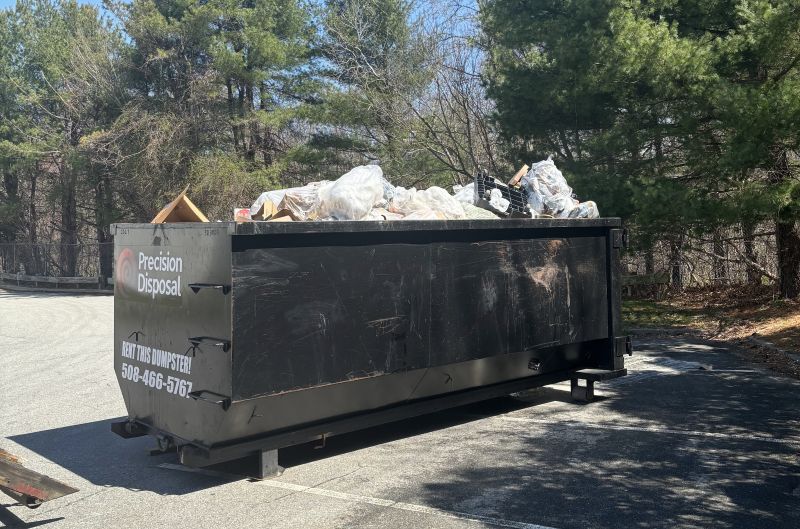
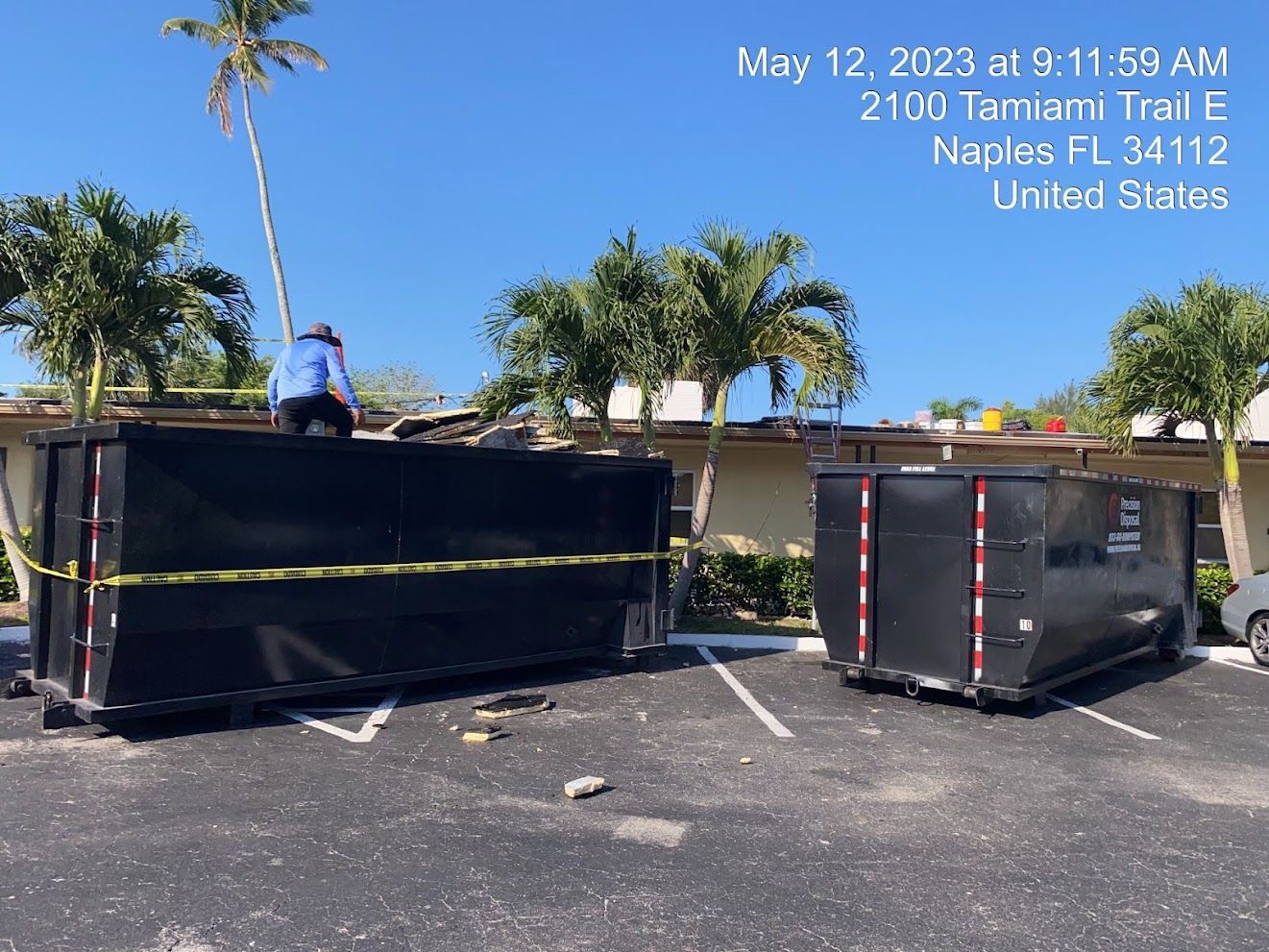
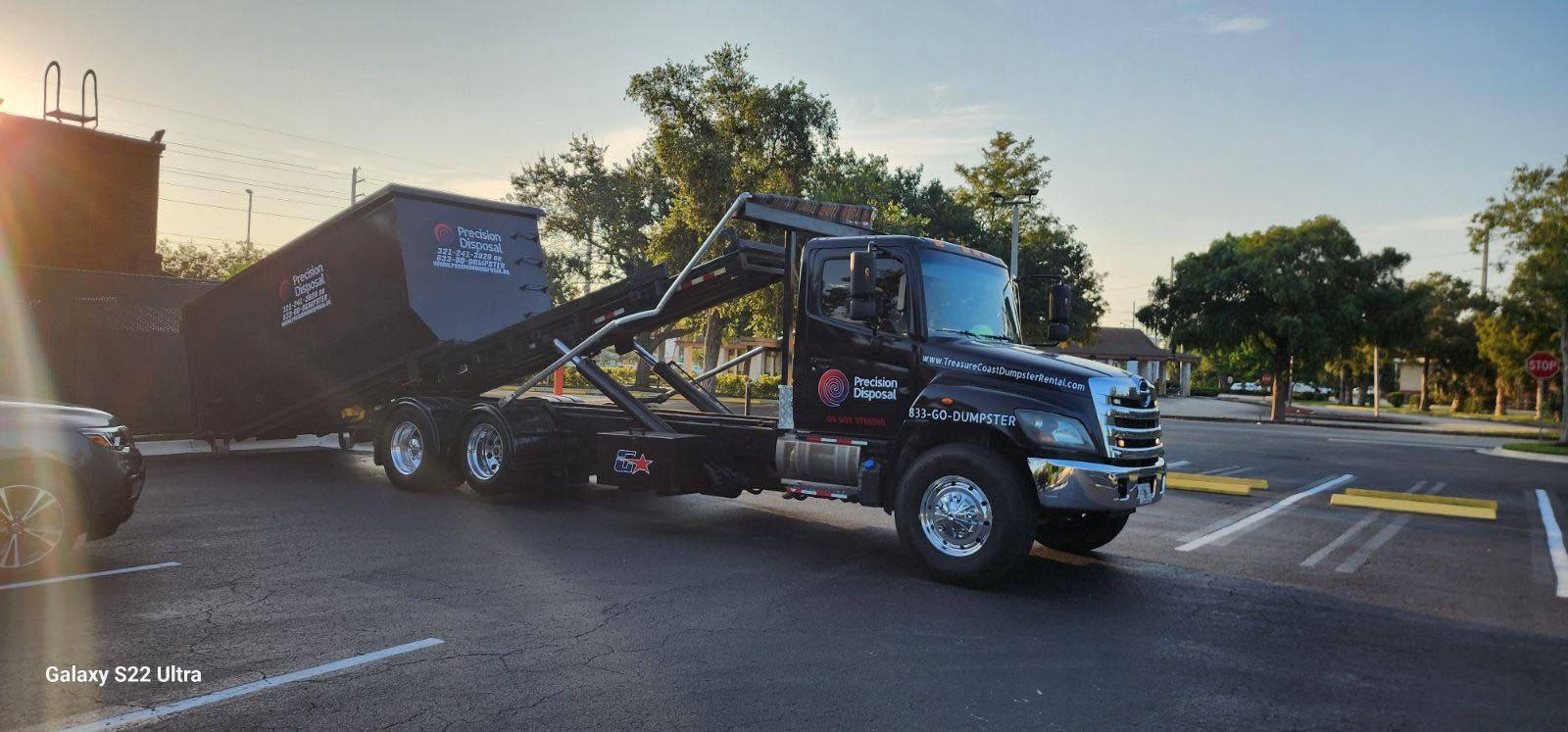
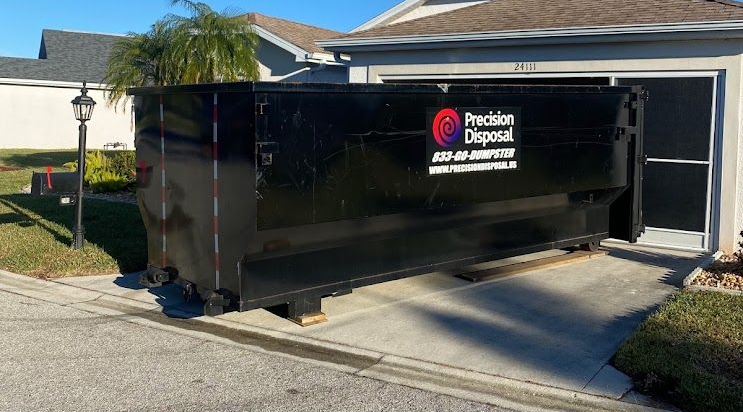
We are a real company. Google us. You will find the profile, the reviews, the trucks, and the same phone numbers on the cans: 508-466-5767 and 833-GO-DUMPSTER. Call or text those numbers Or book at www.PrecisionDisposal.usWe do not ask homeowners to pay on Cash App, Venmo, or Zelle. If someone claiming to be “with Precision” does, they are not with us. If a dumpster with our name on it shows up and you did not book it through us, call us before you fill it. We would rather sort it in five minutes than watch you pay twice.
Bottom line
The old advice still works. Verify the company. Check Google. Do not pay on an app. Do not trust a price that makes no sense. The new advice is this: a confirmation text from a real dumpster company does not mean you paid that company. In the 2025–2026 version, scammers use your real name, email, phone, and address to book the real can on a stolen card. You get the texts. They keep your money. The chargeback lands on everyone else.
Book the company yourself. Pay the company yourself. If that feels like extra work, it is still cheaper than paying twice. Questions before you book? Call or text 508-466-5767 or 833-GO-DUMPSTER.